



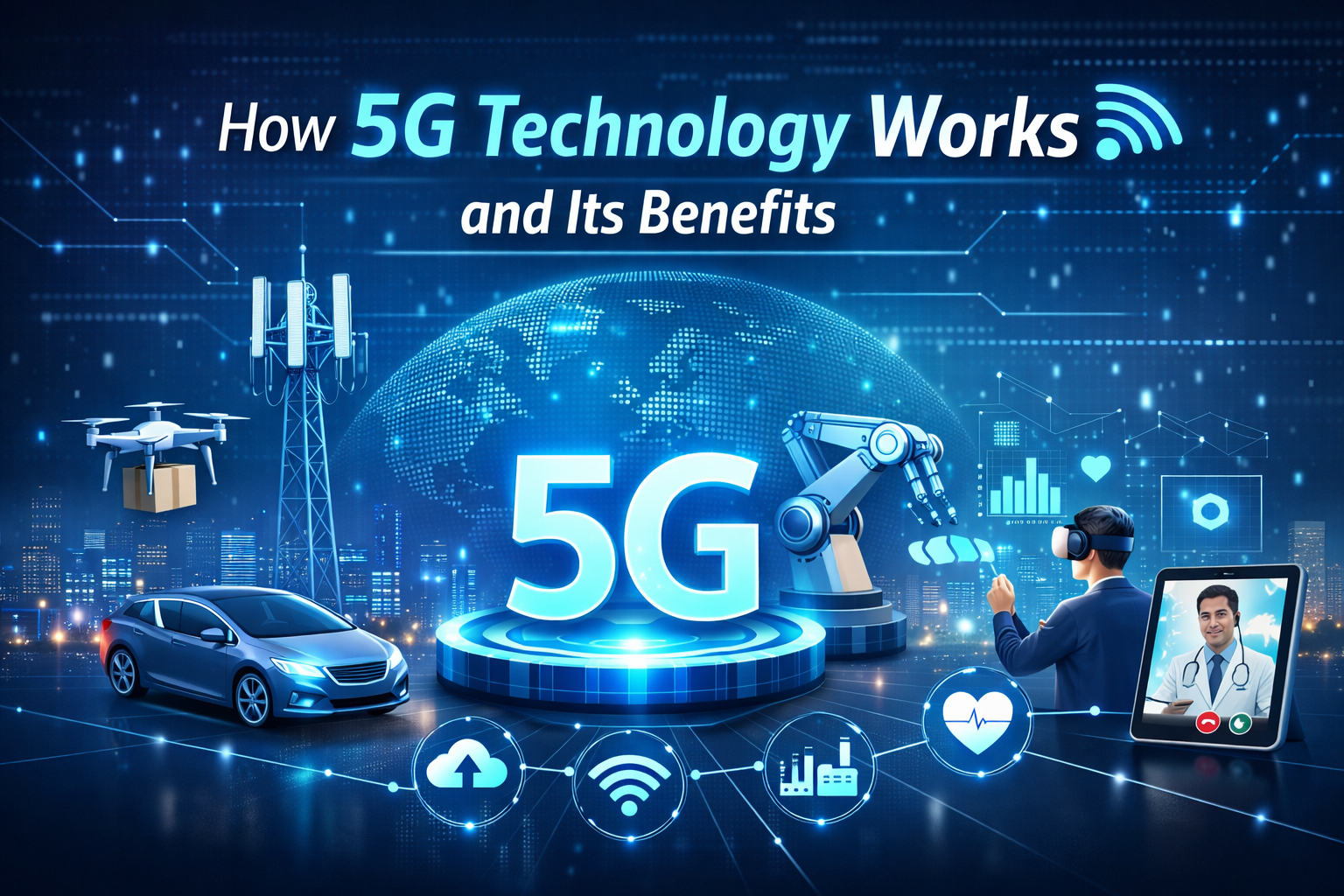
The world of mobile networks is constantly evolving. After 2G, 3G, and 4G, the latest generation of mobile technology is 5G. It promises faster internet speeds, better connectivity, and new opportunities for businesses and consumers alike. Understanding how 5G works and its benefits is essential as this technology becomes more widespread.
What Is 5G Technology?
5G stands for fifth-generation mobile network technology. It is the latest advancement in wireless communication and is designed to replace or complement 4G networks.
Unlike previous generations, 5G is not just about faster internet. It also enables low-latency communication, supports more connected devices, and allows new technologies like smart cities, autonomous vehicles, and virtual reality to work efficiently.
How 5G Technology Works
5G works using several advanced technologies to improve speed, reliability, and connectivity.
1. High-Frequency Radio Waves
5G uses higher frequency bands than 4G, often referred to as millimeter waves. These waves can carry more data at faster speeds. However, high-frequency waves have shorter ranges and may require more cell towers for coverage.
2. Small Cell Technology
To support high-frequency waves, 5G networks use small cells, which are miniature base stations. These are placed closer together in dense urban areas to ensure strong coverage and high-speed connections.
3. Massive MIMO
Massive Multiple Input Multiple Output (MIMO) is another key feature. It allows multiple antennas on a single tower to transmit and receive more data simultaneously, increasing network capacity and efficiency.
4. Beamforming
Beamforming is a technique that directs 5G signals to specific users rather than broadcasting in all directions. This reduces interference, increases speed, and improves reliability.
5. Network Slicing
5G allows network slicing, which means a single physical network can be divided into multiple virtual networks. Each slice can be optimized for a specific purpose, such as autonomous cars, video streaming, or smart factories.
Key Features of 5G
| Feature | Description |
|---|---|
| High Speed | Up to 10–20 times faster than 4G networks |
| Low Latency | Delay reduced to 1–10 milliseconds, ideal for real-time applications |
| High Capacity | Can support millions of connected devices in a small area |
| Enhanced Reliability | Stable connections even in crowded areas |
| Energy Efficiency | Uses advanced technology to save power per data transmitted |
Benefits of 5G Technology
5G offers numerous advantages for consumers, businesses, and governments.
1. Faster Internet Speeds
5G provides ultra-fast download and upload speeds, allowing HD video streaming, online gaming, and large file transfers without delays.
2. Low Latency
The low latency of 5G enables real-time communication. This is critical for applications like autonomous vehicles, remote surgeries, and online gaming.
3. Supports More Connected Devices
5G can handle millions of devices per square kilometer. This is essential for smart cities, IoT devices, and connected industries.
4. Improved Network Reliability
Even in crowded areas like stadiums, airports, or concerts, 5G provides stable and consistent connections.
5. New Opportunities for Businesses
5G opens doors for innovative services like:
- Virtual and augmented reality applications
- Smart manufacturing and Industry 4.0
- Remote healthcare and telemedicine
- Connected autonomous vehicles
6. Energy Efficiency
5G networks are designed to be more energy-efficient, reducing the power used per data transmitted compared to 4G networks.
Potential Challenges of 5G
While 5G offers many benefits, it also has challenges:
- Infrastructure Costs: Requires new cell towers and small cells
- Shorter Range: High-frequency signals cannot travel far without repeaters
- Device Compatibility: Older smartphones may not support 5G
- Privacy Concerns: More connected devices can increase cyber risks
Despite these challenges, 5G is expected to grow rapidly in the coming years.
Frequently Asked Questions (FAQs)
How much faster is 5G than 4G?
5G can be 10–20 times faster than 4G, with speeds up to 10 Gbps under ideal conditions.
What devices support 5G?
Most new smartphones released after 2020 support 5G. Other devices include smart cars, IoT devices, and tablets.
Is 5G safe for health?
According to current research, 5G radiation levels are within safe limits set by health authorities.
Can 5G work everywhere?
5G rollout is ongoing. Urban areas are covered first due to infrastructure requirements, while rural areas may take longer.
Will 5G replace 4G?
5G will complement 4G for several years. 4G will continue to work where 5G is unavailable.
Conclusion
5G technology represents a major leap in mobile networks. It is not just faster internet; it enables low-latency communication, supports millions of connected devices, and unlocks new possibilities in healthcare, transportation, education, and entertainment.
As 5G networks expand worldwide, individuals and businesses will benefit from faster, more reliable, and more innovative digital experiences. Understanding how 5G works helps users appreciate the technology behind this next-generation network.

